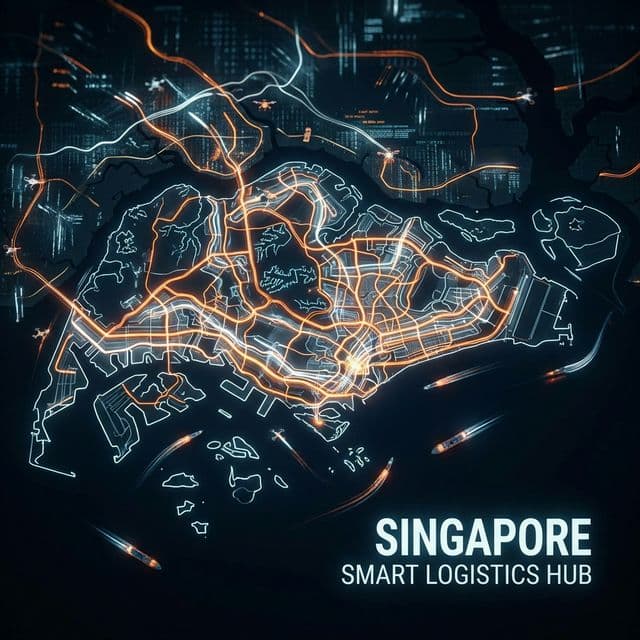
The Singapore Grid
Logistics in Singapore is a battle against the clock and the 'Electronic Road Pricing' (ERP) gantry. While GPS routing is standard, it doesn't solve for the 'Human Variables'—a customer who isn't home, a sudden downpour on the PIE, or a driver who knows a 'shortcut' through a specific HDB estate.
Adaptive Dispatch brings reasoning to the last mile.
Segment 1: Reasoning about Delays
When a delay happens, standard software updates the ETA. An Adaptive Agent negotiates a solution.
- Customer Interaction: The agent detects a 20-minute delay due to a traffic accident. It autonomously WhatsApps the customer: "Hi, there's a delay on the CTE. Would you like us to leave the parcel in the riser, or should we reschedule for 6 PM when you are back?"
- Dynamic Load Balancing: If one driver is ahead of schedule and another is behind, the agent evaluates the perishable nature of the loads and suggests a hand-over point at a specific petrol station to save the overall route.
Segment 2: The ERP & Weather Matrix
Logistics agents reason about cost as much as speed.
- ERP Optimization: The agent calculates if waiting 10 minutes at a loading bay will save $4 in ERP charges without missing the delivery window.
- Rain-Responsive Routing: In Singapore, rain stops everything. The agent detects a storm cell moving toward the East and reroutes 'Outdoor Drop-off' parcels to the end of the queue, prioritizing 'Indoor Mall' deliveries while the weather clears.
Segment 3: Empowering the Driver
We move from 'Turn-by-Turn' instructions to 'Strategic Guidance'. Drivers are given autonomy, with the AI acting as a co-pilot that provides the 'Why' behind every change, reducing stress and increasing job satisfaction.
Conclusion
The Logistics Leap is moving from 'Moving Boxes' to 'Managing Time'. By using reasoning-capable agents, Singaporean logistics SMEs can compete with global giants on service quality and operational agility.